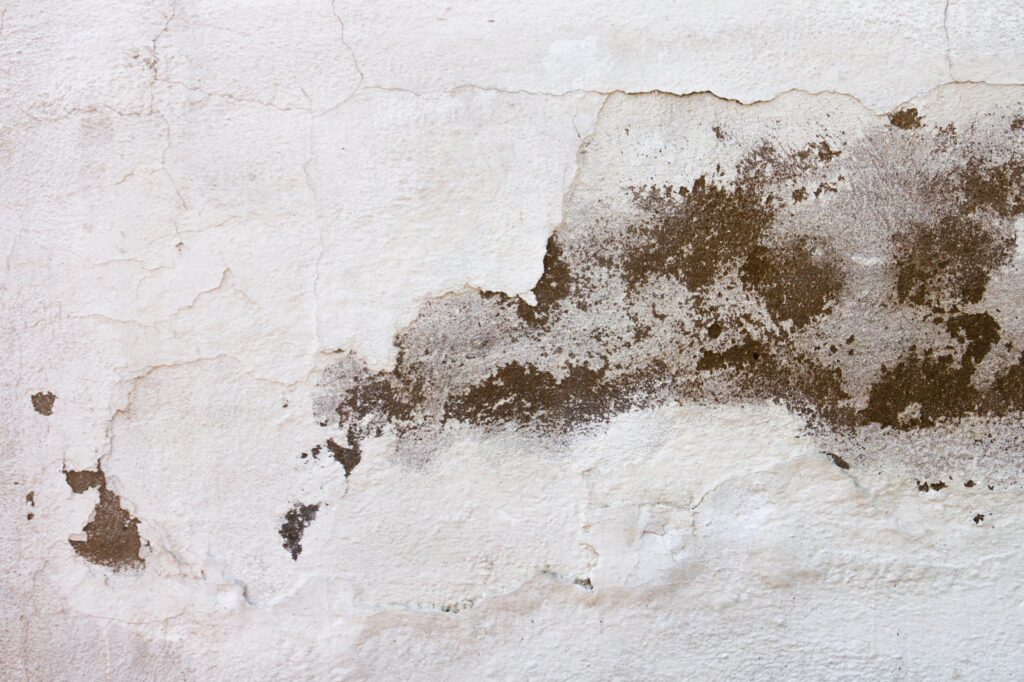
The short answer is yes, but not always, and not because insulation is inherently a bad idea.
When cavity wall insulation is installed correctly, in a suitable property, with the right materials, it works exactly as intended. It reduces heat loss, lowers energy bills, and makes your home more comfortable.
The problems start when one or more of those conditions aren’t met. And when things go wrong with cavity wall insulation, damp and mould are usually the first signs.
If you’re noticing damp patches, mould growth, or a musty smell in your home, particularly if these problems appeared after insulation was installed, the insulation itself may be the cause. This guide explains how it happens, what to look for, and what you can do about it.
How Cavity Wall Insulation Causes Damp
To understand how insulation can lead to damp, it helps to know what the cavity in your wall is actually for.
A cavity wall is made up of two layers, an outer wall and an inner wall, with a gap between them. That gap exists by design. It acts as a drainage channel: when rain penetrates the outer brickwork (which it does, to some degree, in every property), it runs down the inside face of the outer wall and drains away at the base. The inner wall stays dry because the cavity keeps the moisture at a distance.
When you fill that cavity with insulation, you’re placing a material into the gap that was previously keeping moisture away from the inside of your home. If everything goes well, the insulation material repels water and the cavity still functions. But if the insulation absorbs moisture, whether because the brickwork is porous, the pointing is damaged, or the property is exposed to heavy wind-driven rain, it can act as a bridge, transferring water directly from the outer wall to the inner wall.
This is called moisture bridging, and it’s the primary mechanism through which cavity wall insulation causes damp. Instead of rain draining harmlessly down the cavity, it soaks into the insulation and migrates inward. Your internal walls become cold and wet, creating the exact conditions where damp and mould thrive.
Why It Happens: The Most Common Causes
Not every insulated home develops damp problems. The ones that do almost always have one or more of these factors at play.
The property wasn’t suitable for insulation
Some homes should never have had cavity wall insulation installed. Properties in exposed locations such as hilltops, coastal areas, or anywhere that faces prevailing wind-driven rain are at significantly higher risk. The Building Research Establishment has published guidance confirming that fully filling a cavity with insulation in high-exposure zones increases the risk of rain penetration.
Properties with narrow cavities (under 50mm), damaged brickwork, cracked pointing, or porous render are also poor candidates. If water can already get into the outer wall easily, adding insulation gives it somewhere to go.
The insulation was installed badly
Correct installation requires holes drilled at specific intervals in the right pattern, even injection pressure, and consistent coverage throughout the cavity. When installers rush the job by drilling too few holes, injecting unevenly, or failing to fill the cavity completely, the result is gaps, voids, and cold bridges.
These voids create areas where the wall has no thermal protection. The wall surface in those spots stays cold, and warm, moist air inside your home condenses on the cold surface. That condensation leads to damp patches and, eventually, mould.
The wrong material was used
Different insulation materials behave very differently when exposed to moisture. Older urea-formaldehyde (UF) foam, widely used in the 1980s and 1990s, degrades over time. It shrinks, crumbles, and settles to the bottom of the cavity. As it breaks down, it leaves gaps at the top of the wall where heat escapes and condensation forms.
Some materials absorb water more readily than others. In an exposed property where water penetration through the outer wall is likely, a water-resistant material is essential. If a non-resistant product was used, it can become saturated, holding moisture inside the cavity rather than keeping it out.
Existing problems weren’t fixed first
If your property already had issues like cracked pointing, damaged render, blocked guttering, or a failed damp-proof course, these should have been resolved before insulation was installed. Installing insulation over existing defects seals the problem inside the wall and makes it worse. Moisture that was previously escaping through the cavity is now trapped against the insulation, with nowhere to go but inward.
How to Spot Damp and Mould Caused by Failed Insulation
The symptoms can appear gradually, sometimes months or even years after installation. Here’s what to watch for.
Damp patches on internal walls. The most obvious sign. If external-facing walls that were previously dry are now showing damp staining, moisture is migrating through the cavity. This is especially telling if the damp appeared after insulation was installed.
Black mould on walls or in corners. Mould needs two things: moisture and a cold surface. When insulation fails, it creates both. The wall surface drops in temperature because the insulation is no longer working (or is actively drawing moisture inward), and condensation forms. Mould colonies follow, typically on external walls, behind wardrobes and furniture, and in the corners of rooms where air circulation is poorest.
A musty, damp smell. Even before mould becomes visible, you might notice a persistent musty odour in certain rooms. Damp insulation trapped inside a wall generates this smell as the moisture stagnates.
Cold spots on walls. If you place your hand on an external wall and certain areas feel noticeably colder than others, the insulation has likely slumped, settled, or broken down in those spots. The uneven temperature is a sign that the cavity isn’t consistently filled.
Peeling wallpaper or blistering paint. Moisture working its way through the wall will lift wallpaper adhesive and blister paint finishes. If this is happening exclusively on external walls, the cavity insulation is the prime suspect.
Rising energy bills. If your heating costs have increased despite having insulation, the material may be saturated and no longer providing any thermal benefit. Wet insulation can actually conduct heat faster than an empty cavity, meaning your home may be losing more heat than it would with no insulation at all.
Damp and Mould in Cheshire Homes: What We See
Across Cheshire, we regularly assess properties in Nantwich, Crewe, Middlewich, Sandbach, Northwich, Tarporley, Tattenhall, Macclesfield and the surrounding towns where homeowners are experiencing damp and mould problems linked to failed cavity wall insulation.
Many of these properties were insulated under government energy efficiency schemes in the 2000s and 2010s. The insulation was often installed quickly, at scale, and in some cases into properties that weren’t suitable: older homes with narrow cavities, exposed locations, or brickwork that was already allowing moisture ingress.
The result, 10 to 20 years later, is a growing number of homes where the insulation that was supposed to save energy is now causing damp, mould, and cold. If your Cheshire home is showing these symptoms, you’re not alone, and the problem is fixable.
What to Do If You Suspect Your Insulation Is Causing Damp
Don’t ignore it. Damp caused by failed insulation doesn’t resolve on its own. The insulation is sitting inside a sealed cavity, holding moisture against your inner wall. Without intervention, the problem gets progressively worse. Damp spreads, mould grows, wall surfaces degrade, and in severe cases, wall ties can corrode, affecting the structural integrity of the building.
Get a professional assessment. The only way to confirm whether the insulation is the cause is to inspect the cavity directly. This involves inserting a borescope camera through a small drilled hole to view the insulation material, check its condition, and look for moisture. A thorough assessment should also examine the external brickwork, pointing, guttering, and damp-proof course to identify whether other factors are contributing.
Don’t just treat the mould. Scrubbing mould off the wall or applying mould-resistant paint addresses the visible symptom but not the cause. If the insulation is bridging moisture into the wall, the mould will return, often within weeks. The underlying insulation problem needs to be resolved first.
Consider cavity wall insulation removal. If the assessment confirms that the insulation has failed, whether it’s saturated, slumped, or was never suitable, cavity wall insulation removal is typically the most effective solution. The old insulation is extracted from the cavity using specialist equipment, the cavity is cleaned and cleared, and once any underlying issues (brickwork, pointing, guttering) are resolved, the wall can be re-insulated with a material that’s appropriate for your property.
We carry out cavity wall insulation removal and replacement across Cheshire and the North West. If you’re experiencing damp or mould and suspect your insulation is the cause, we’ll assess your property and give you an honest answer.
Book a free cavity wall assessment → | Call 01270 814145
Frequently Asked Questions
Can cavity wall insulation cause damp?
Yes. When insulation is installed in an unsuitable property, with the wrong material, or incorrectly, it can absorb moisture from the outer wall and bridge it to the inner wall, leading to damp patches, condensation, and mould growth.
Can cavity wall insulation cause mould?
Yes. Failed insulation creates cold, damp wall surfaces: the ideal conditions for mould. If mould has appeared on external walls, behind furniture, or in room corners since insulation was installed, the insulation is likely the cause.
How do I know if my cavity wall insulation is causing damp?
Look for damp patches on external-facing walls, mould growth, cold spots, peeling wallpaper, musty smells, or rising energy bills, particularly if these appeared after insulation was installed. A professional borescope inspection of the cavity will confirm whether the insulation has failed.
Should I just treat the mould?
No. Mould is a symptom, not the cause. If the insulation is bridging moisture into your wall, the mould will return after surface treatment. The insulation itself needs to be addressed, usually through extraction and replacement.
Can I fix damp from failed insulation myself?
Surface treatments like anti-mould paint or dehumidifiers won’t solve the underlying problem. Cavity wall insulation removal requires specialist equipment and should be carried out by trained professionals. However, you can help manage moisture levels by improving ventilation, keeping heating consistent, and ensuring gutters and downpipes are clear.
How much does it cost to fix damp caused by cavity wall insulation?
The cost depends on the extent of the problem. Cavity wall insulation removal typically starts from around £1,500 for a single wall and can range up to £5,000 for a full extraction on a detached property. Re-insulation with a suitable material is usually recommended and quoted alongside the extraction work. We provide a clear, written quote after every assessment.
Does Insul8 remove cavity wall insulation in my area?
We carry out cavity wall insulation removal across Cheshire (including Nantwich, Crewe, Sandbach, Middlewich, Northwich, Tarporley, Congleton, Macclesfield, Chester), Greater Manchester (Manchester, Stockport, Altrincham, Warrington, Stretford, Urmston, Oldham, Rochdale, Salford), Shropshire (Shrewsbury, Telford), and Staffordshire (Stoke-on-Trent, Stafford).